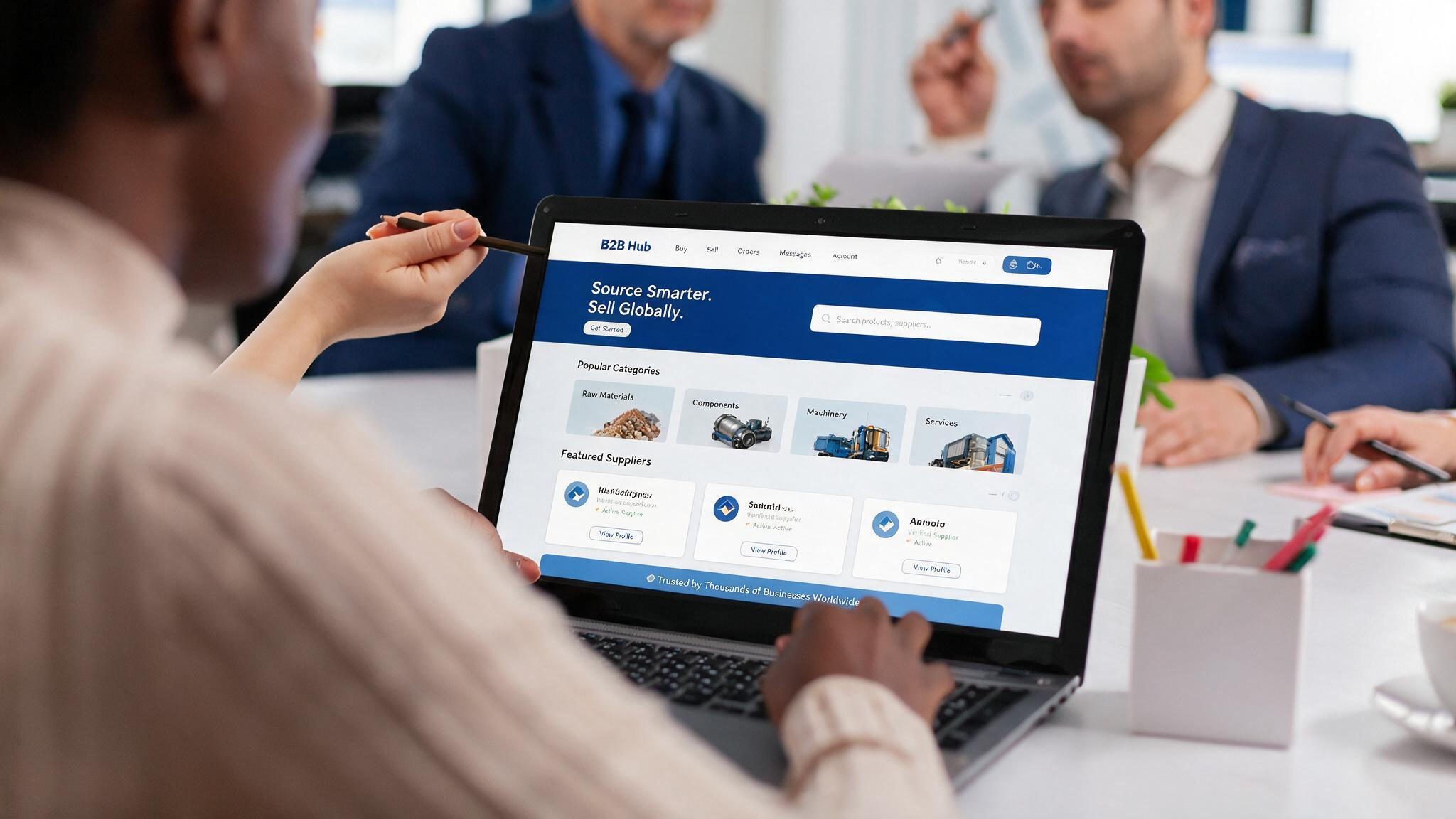
The rise of marketplaces is impossible to ignore. In 2024, global e-commerce revenue reached $5.8 trillion, with over 27 million active online stores. Marketplaces played a central role in that growth, with platforms like Amazon used by the vast majority of online shoppers, and resale sites like eBay and Vinted attracting tens of millions of consumers.
For e-commerce businesses, overlooking this sales channel means missing out on a major growth opportunity. So how do you approach it strategically in 2026?
This guide walks you through 10 essential steps to give you everything you need for a successful marketplace launch, while helping you build a strategy that's solid, focused, and aligned with your goals.
The foundation of any successful marketplace strategy is also the most commonly skipped step: defining clear goals.
Before diving in, take the time to think about what you actually want to get out of this new channel. Ask yourself the right questions: Are you looking to grow brand awareness? Acquire new customers? Drive more sales? Test new products? Diversify your revenue streams?
Your answers will shape every decision that follows and define your positioning from day one.
In 2025, the marketplace landscape is vast and varied. The key is finding the platforms that best match your brand identity, your target market, and your sector.
To stand out from the competition, you need to tailor your catalogue to each type of marketplace rather than simply replicating your existing offer.
Create exclusive bundles, curated sets, or give early access to new products. Differentiate yourself at every opportunity.
In a digital world where customer experience is everything, selling on marketplaces doesn't have to mean losing your brand's personality. In fact, it's an opportunity to strengthen it.
Put real effort into your visual presentation, your product listings, and ongoing customer interactions. Your marketplace presence is your digital shopfront.
Balance is everything, and your profitability depends on getting it right.
Offer competitive prices without sacrificing your margins, and always factor in your full cost structure. We also recommend using a repricing tool to monitor competitors and run targeted promotions without constant manual intervention.
Strong logistics aren't optional on marketplaces. Delivery is one of the most critical factors in customer satisfaction, and a single bad experience can cost you reviews and repeat business.
Choose the right fulfilment model (in-house, outsourced, or third-party fulfilment), optimise your stock management with a WMS (Warehouse Management System), work with multiple carriers, and automate shipment tracking with a dedicated TMS (Transport Management System).
Don't be afraid to invest in the right tech stack. Think of these tools as infrastructure, not overhead. They make your day-to-day operations faster, more accurate, and easier to scale.
Key tools to consider: an OMS (Order Management System), a WMS, a TMS, a repricing tool, a CRM, and a product feed manager. Together, they form the backbone of a well-run marketplace operation.
Selling on marketplaces requires specific skills and a clear internal structure. You may need to hire new team members or upskill existing ones.
Don't underestimate the importance of getting this right. A dedicated marketplace manager, a responsive customer service team, and an efficient logistics operation are all essential to long-term success.
This guide focuses on launching a marketplace presence, but it's worth noting that another option exists: replatforming. In some cases, it may make more sense to rethink your entire e-commerce architecture and become a marketplace operator yourself, opening up entirely new markets. That said, this is a more ambitious route. It may involve adopting a new platform or adding specific modules to your current setup, and it represents a significant operational change for your organisation.
Whether you're launching on an existing marketplace or building your own, continuous improvement is non-negotiable. Marketplace selling is an ongoing process: track your results, test new approaches, and stay close to the latest platform trends and algorithm changes.
Launching successfully on marketplaces is still a real challenge in 2025. Turning the opportunity into results requires a solid strategy and genuine expertise, especially for businesses whose core operations depend on digital performance.
Need a partner to help you navigate this space and maximise your chances of success? Lundi Matin supports your sustainable growth across marketplaces.
1-month launch with our all-in-one solution
Specialized in B2B e-commerce
Integration team to make your project easier

Morgan Clark
Platform manager at Label Corner
"Customer service is highly responsive and the plateform is easy to use.
The solution has a great adaptability, great value for money and enables a fast implementation"